What's the Problem This Is Trying to Solve?
When we burn fuel. in cars, power plants, or factories. it creates a gas called carbon dioxide (CO₂). CO₂ floats up into the atmosphere and acts like a blanket around the Earth, trapping heat. The more CO₂ we put up there, the warmer things get. That's climate change in a nutshell.
One idea for dealing with this: what if instead of letting CO₂ go into the air, we caught it and stored it somewhere it can't escape?
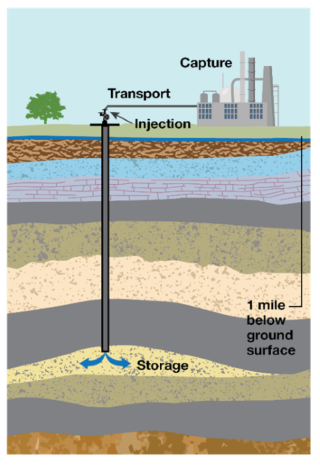
That's what carbon capture is. You grab the CO₂ before it reaches the atmosphere and pump it deep underground into rock formations that can hold it. kind of like filling an underground storage tank.
What Happened in Kansas?
A company called PureField runs an ethanol plant near the town of Russell, Kansas. Making ethanol (a type of fuel made from corn) creates CO₂ as a byproduct. Normally, that CO₂ just goes into the air.
PureField asked EPA for a special permit. called a "Class VI" permit. to inject that CO₂ deep underground instead. On April 10, 2026, EPA said yes.
How deep are we talking?
The CO₂ goes about 3,500 feet underground. that's deeper than three Eiffel Towers stacked on top of each other. At that depth, there's a layer of spongy rock (called the Arbuckle formation) that can soak up the CO₂ like a sponge soaks up water. Above that spongy rock is a layer of solid rock that acts like a lid, keeping the CO₂ trapped.
The drinking water we use comes from much shallower underground, usually less than a few hundred feet deep. So there's a lot of rock between the stored CO₂ and anyone's water supply.
The numbers
PureField can pump up to 150,000 metric tons of CO₂ underground per year. That's roughly equal to taking 33,000 cars off the road for a year. They can do this for 12 years. After they stop, they have to keep watching the site for 50 more years to make sure nothing leaks.
Is It Safe?
EPA requires a lot of safety checks before approving one of these permits. The company has to test the rock layers to make sure they can hold the CO₂. They have to monitor the well and the area above it the entire time they're pumping. And they can't just walk away when they're done. that 50-year monitoring period after injection stops is there to catch any slow leaks.
If the rock cracked or the CO₂ started migrating toward drinking water, the monitoring system is designed to catch it early.
Is This the Answer to Climate Change?
That depends on who you ask. People who support carbon capture say it's a practical tool. we can keep making things we need (like ethanol) while keeping the CO₂ out of the atmosphere. People who criticize it say it's expensive, only works at certain sites, and gives industries an excuse to keep polluting instead of switching to cleaner energy.
Both sides have fair points. What's not debatable: this specific permit is heavily regulated. EPA looked at the geology, set strict rules, and will monitor the site for decades. As carbon capture goes, this is how it's supposed to work.
The bottom line
This is one well at one ethanol plant in one state. It won't solve climate change by itself. But it's a real example of the technology working under real rules with real oversight, and it's the first of its kind in Kansas.
Source: EPA News Release, "EPA Issues Class VI Well Permit to PureField Carbon Capture in Kansas" (April 10, 2026). Safe Drinking Water Act, Underground Injection Control program. Have a correction? Contact us.