Let's Start Simple: What's in the Air?
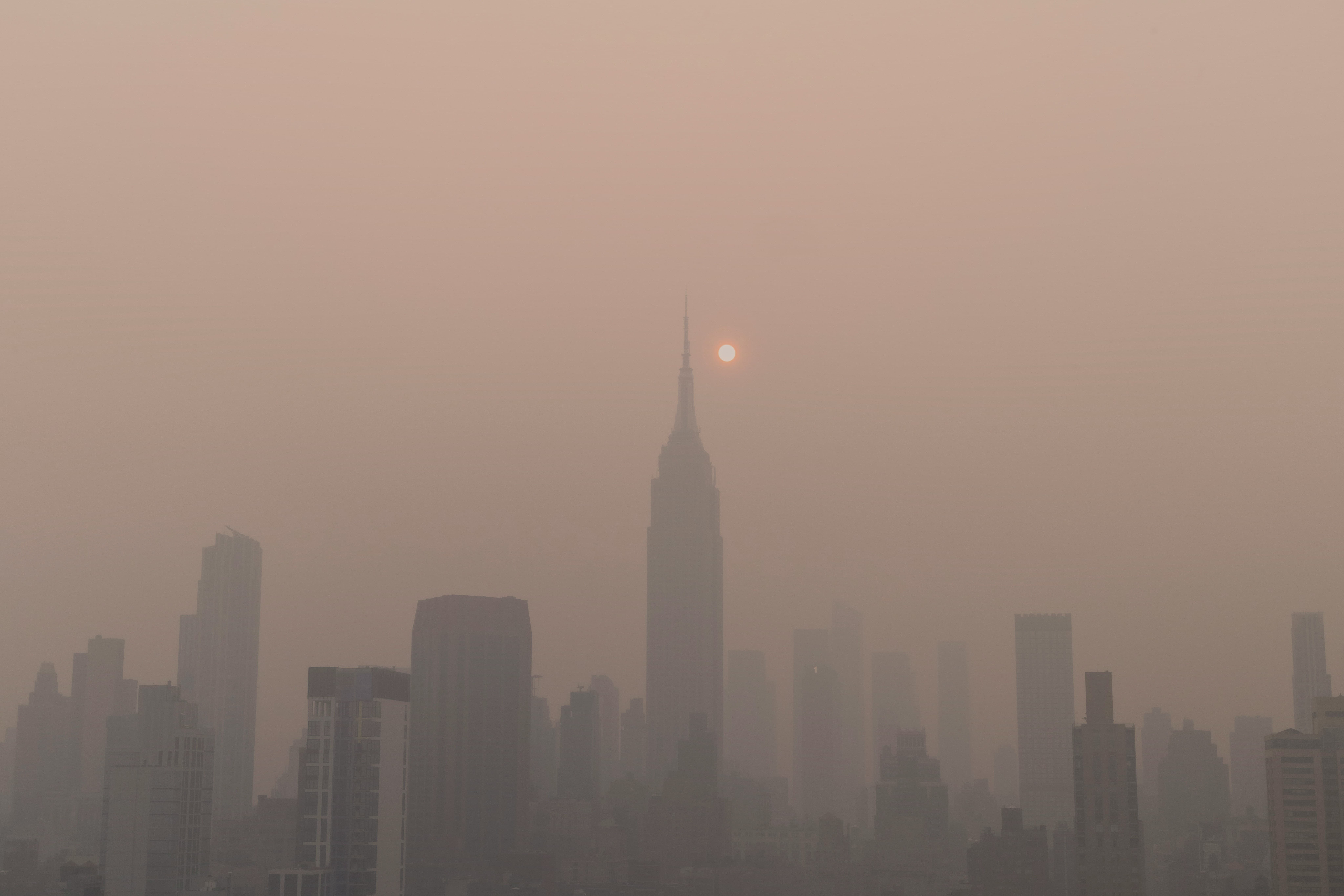
The air around you has stuff in it you can't see. Some of it is harmless. Some of it isn't. One of the most dangerous things in the air is called PM2.5. tiny particles so small that 30 of them lined up side by side would be thinner than a single hair on your head.
These particles come from car exhaust, power plants, factories, wildfires, and even cooking. Because they're so tiny, when you breathe them in, they don't stop in your nose or throat like dust would. They go deep into your lungs. Some of them pass through your lungs into your bloodstream. From there they can reach your heart and your brain.
Why this matters to you
According to EPA's Integrated Science Assessment, PM2.5 exposure is linked to asthma attacks, heart attacks, strokes, lung cancer, and premature death. The people hit hardest are children, the elderly, people with heart or lung conditions, and people who live near highways or industrial areas.
What's a NAAQS? (Simpler Than It Sounds)
Think of it like a speed limit for pollution.
A speed limit says "you can't go faster than 65 mph on this road." It's a line. Above it, you're breaking the law.
A NAAQS (National Ambient Air Quality Standard) works the same way, but for air. It says: "the amount of this pollutant in the air can't be higher than this number." If the air in your area has more pollution than the limit allows, your area is breaking the standard.
EPA sets these limits based on recommendations from its Clean Air Scientific Advisory Committee (CASAC), an independent panel of scientists and health experts. There are limits for six different pollutants. PM2.5 is one of them.
What Changed in 2024?
In February 2024, EPA looked at the latest medical research and decided the old PM2.5 limit wasn't strict enough. People were getting sick and dying at pollution levels that were technically "passing." So EPA lowered the annual limit from 12 micrograms per cubic meter to 9 micrograms per cubic meter.
In plain terms: EPA said "the air needs to be cleaner than we thought."
The old limit vs. the new limit
Old standard: 12 µg/m³ (annual average). New standard: 9 µg/m³. That 3-point difference might sound small, but at these levels, even a small change affects millions of people's health. According to EPA's regulatory impact analysis, the stricter standard would prevent thousands of premature deaths per year.
What's Supposed to Happen After a New Standard?
Here's where the law comes in. When EPA sets a new air quality limit, there's a specific process that has to happen. It's written into the Clean Air Act, and it's not optional:
The process, step by step:
Step 1: EPA sets the new standard. (Done. February 2024)
Step 2: Each state has one year to look at air monitoring data and tell EPA which areas pass, which fail, and which they're not sure about. (Most states did this)
Step 3: EPA has two years to review what the states sent in, make final decisions, and officially publish which areas in the country are "nonattainment" (failing), "attainment" (passing), or "unclassifiable" (not enough data). This is called "designations."
Step 4: Once an area is designated as "nonattainment," the state has to create a plan to clean up the air. This can mean stricter rules on factories, power plants, or vehicles in that area.
The critical point: nothing happens until Step 3. Until EPA officially labels an area as failing, no cleanup plan is required. The label is the trigger. No label, no action.
What Actually Happened
- February 2024: EPA sets the new, stricter PM2.5 standard.
- February 2025: Most states submit their recommendations to EPA on which areas pass or fail.
- November 2025: The new EPA administration (under Administrator Lee Zeldin) asks a federal court to throw out the 2024 standard entirely. without public notice or comment.
- February 7, 2026: The legal deadline for EPA to publish the pass-or-fail labels. The deadline passes. EPA publishes nothing.
- February 10, 2026: 18 organizations send EPA a formal notice: do your job within 60 days, or we sue.
- April 2026: The 60-day window has passed. The lawsuit is expected to move forward.
Who's Suing and Why?
The groups suing include the American Lung Association, the American Public Health Association, the American Thoracic Society (the doctors who specialize in lungs), the Sierra Club, the Natural Resources Defense Council, the Environmental Defense Fund, and 12 other health and environmental organizations. They're represented by lawyers from Earthjustice, the Clean Air Task Force, NRDC, and the Southern Environmental Law Center.
Their argument is simple: the Clean Air Act says EPA "shall" publish the results within two years. "Shall" in legal language means "must". it's not a suggestion. The deadline was February 7, 2026. EPA missed it. That's a violation of the law, and courts can order EPA to act.
Why Didn't EPA Act?
EPA hasn't officially said why it missed the deadline. But the context is clear: in November 2025, EPA asked a federal court to throw out the 2024 PM2.5 standard entirely. The current administration has argued the standard is too strict and should be reconsidered. The court hasn't ruled on that request yet.
In the meantime, the standard is still legally in effect. And as long as it's in effect, the law requires EPA to label areas under it. You can't ignore a law because you've asked a court to change it. the law applies until the court says otherwise.
An analogy:
Imagine a school has a rule that every classroom must have a fire extinguisher inspected by March 1st. The principal thinks the rule is too strict and asks the school board to change it. The school board hasn't decided yet. March 1st passes and no inspections happened. The rule is still the rule. The principal broke it, even if the school board eventually agrees to change it later.
What Happens Next
The lawsuit will likely ask a federal court to order EPA to publish the pass-or-fail labels by a specific date. Courts have done this before. it's a common outcome when agencies miss legal deadlines. The court can't change the standard or decide which areas pass or fail. It can only say: "EPA, do what the law already requires you to do."
If EPA is eventually forced to publish the pass-or-fail labels, some areas of the country will be labeled as "nonattainment" for PM2.5. Those areas will then have to develop plans to reduce particle pollution, which could mean stricter emissions rules for industrial facilities, tighter vehicle emission standards, or new requirements for construction and agriculture.
If the D.C. Circuit Court grants EPA's separate request to throw out the 2024 standard, the labeling requirement would go away, but so would the health protections the standard was designed to provide.
The bottom line
Right now, there are areas in the United States where the air has more tiny particles in it than EPA's own scientific advisors have determined is safe. EPA knows which areas those are. The law requires EPA to say so publicly. EPA hasn't done it. People in those areas are breathing that air every day while the paperwork sits undone.
Sources: Notice of Intent to Sue, Earthjustice et al. to EPA Administrator Zeldin (February 10, 2026); Clean Air Act §§ 107(d)(1)(B), 107(d)(2), 42 U.S.C. §§ 7407(d); 89 FR 16,202 (March 6, 2024); Respondents' Motion for asking the court to throw out the rule, Kentucky v. EPA, No. 24-1050 (D.C. Cir. Nov. 24, 2025). Have a correction? Contact us.