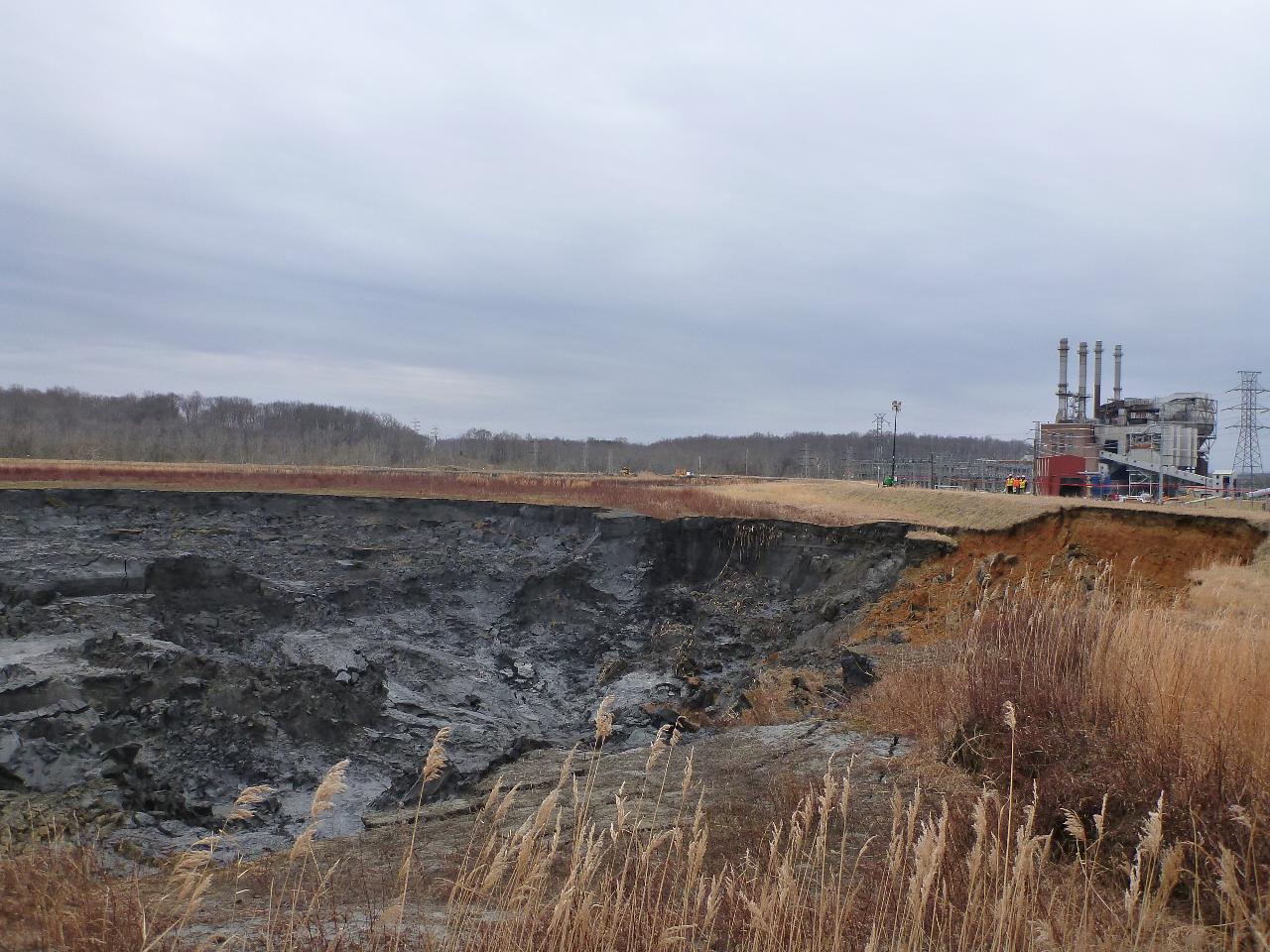
What Is Coal Ash?
Every time a coal-fired power plant burns coal to make electricity, what's left behind is ash. Tons of it. This waste. officially called coal combustion residuals, or CCR. is one of the largest categories of industrial waste in the United States.
Coal ash isn't just gray powder. It contains concentrated levels of toxic heavy metals that were in the coal: arsenic, boron, cadmium, chromium, lead, mercury, radium, and selenium. When coal ash gets wet, from rain, from groundwater, from being stored in open ponds. those metals can leach out and contaminate drinking water, rivers, and soil.
Think of it like a giant toxic tea bag.
Imagine filling a bag the size of a football field with a mix of heavy metals, then dropping it in a pond and letting it sit for decades. Water flows through it, picks up the toxins, and carries them into the ground. That's essentially what a coal ash surface impoundment is, and there are hundreds of them across the country.
For decades, power companies stored coal ash with almost no federal oversight. They dumped it in unlined pits, piled it in fields, and let it sit in open ponds next to rivers and lakes. Some of those sites have been leaking toxic metals into groundwater for years.
What Happened in Kingston, Tennessee
At 1:00 a.m. on December 22, 2008, a containment wall at the Tennessee Valley Authority's Kingston Fossil Plant in Roane County, Tennessee collapsed. Over 1.1 billion gallons of coal ash slurry. a wet mix of coal ash and water. flooded into the Emory River and across 300 acres of land, covering some areas six feet deep. It buried 12 homes, pushed one entirely off its foundation, ruptured a gas line, and contaminated two rivers.
According to Earthjustice, it was the largest industrial spill in United States history: about 100 times the volume of the Exxon Valdez oil spill. Enough sludge to fill 1,660 Olympic-sized swimming pools.
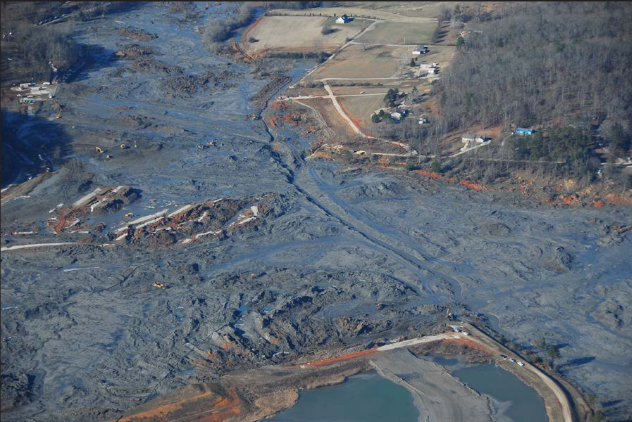
The cleanup took seven years and cost over $1.1 billion, according to TVA records. But the human cost was worse. According to court filings and reporting by WPLN News and National Geographic, more than 50 of the workers hired to clean up the spill have since died from brain cancer, lung cancer, leukemia, and other diseases. Hundreds more have reported illnesses. In November 2018, a federal jury in Knoxville found that the cleanup contractor, Jacobs Engineering, had failed to provide workers with adequate protective equipment and had misled them about the dangers of coal ash exposure, according to the U.S. District Court for the Eastern District of Tennessee. The jury concluded that workers' exposure to coal ash could have caused their illnesses. The workers and Jacobs reached a confidential settlement in 2023, according to court records reported by the Milberg law firm. Internal documents cited in the litigation indicated that TVA had been aware of structural issues at the Kingston facility prior to the spill.
Kingston wasn't the only one
In 2014, according to the North Carolina Department of Environmental Quality, a storm drain at a Duke Energy ash pond in North Carolina collapsed, dumping an estimated 39,000 tons of ash and 27 million gallons of contaminated water into the Dan River. Contaminants were detected 70 miles downstream, according to state monitoring data. According to the North Carolina Utilities Commission, Duke's North Carolina customers are paying $232 million for coal ash cleanup costs. These aren't freak accidents. they're the predictable result of storing toxic waste in unlined pits next to rivers for decades.
What it takes to clean up a coal ash disaster
According to EPA's project completion report for the Kingston spill, the cleanup took 6 years, cost $1.178 billion, and required 900 workers on-site daily at peak. Workers logged 6.7 million man-hours. They dredged 3.5 million cubic yards of ash from the river. enough to fill the Empire State Building two and a half times. They loaded 4 million tons onto 41,000 railcars and shipped it to a landfill in Alabama. Lined up as a single train, those railcars would stretch from Knoxville to Nashville. The on-site containment cell covers 240 acres. about the size of 56 Walmart Superstores. surrounded by a 13-mile slurry wall, the longest ever built in the United States, according to the EPA report. That's what it takes to clean up one coal ash site. According to EPA data, there are approximately 775 more across the country.
What Rules Exist Now?
- 2015: EPA issues the first-ever federal rules for coal ash disposal (the CCR rule). Required groundwater monitoring, structural integrity standards, and closure of the worst sites. But it only covered active coal ash dumps. it exempted older "legacy" sites that had stopped receiving waste.
- 2018: A federal court ruled that exempting legacy sites was illegal. EPA had to regulate them too.
- 2024: The Biden EPA finalized the Legacy CCR rule, extending monitoring and cleanup requirements to hundreds of older coal ash ponds and a new category called CCR Management Units (CCRMUs). basically any place at a power plant where coal ash had been dumped on the ground.
- February 2026: The Trump EPA delays the CCRMU monitoring deadlines by three years.
- April 2026: EPA proposes to roll back major parts of the 2024 rule.
What Is EPA Proposing to Change?
Rescinding CCR Management Unit rules entirely
The 2024 rule required power companies to identify every place on their property where coal ash had been dumped, not just the official ponds and landfills, but fill areas, roadbeds, and other spots. Then they had to monitor groundwater and clean up contamination. According to EPA's proposed rule, the agency now considers these requirements "infeasible and impractical" and is proposing to eliminate them. According to Earthjustice and other environmental groups, these sites account for roughly half of all coal ash ever generated in the U.S.
Relaxing groundwater monitoring
Under the current rules, groundwater monitoring wells have to be placed at the edge of the coal ash unit. as close as possible to where contamination would first appear. The new proposal would allow monitoring wells to be placed further away, at a "site-specific" point of compliance determined during permitting. According to environmental groups including the Environmental Integrity Project, this could make it easier to miss contamination or detect it only after it has already spread.
Making it easier to leave coal ash in place
The current rules generally require contaminated coal ash sites to be cleaned up. either by removing the ash or capping it with an engineered cover. The proposal would give permit authorities more flexibility on closure methods, including allowing coal ash to stay in place under certain conditions. It would also let companies extract coal ash for "beneficial use" during the post-closure monitoring period. a time when the site is supposed to be monitored for leaks, not actively disturbed.
Loosening "beneficial use" standards
Coal ash can be recycled into concrete, wallboard, and road base. The 2015 rule allowed this but required an environmental demonstration for large unencapsulated uses (dumping more than 12,400 tons of loose coal ash on land). The new proposal eliminates that environmental review requirement. According to EPA, this change would encourage recycling. According to Earthjustice, it could allow coal ash to be dumped on land under the label of "beneficial use" without adequate review of whether it contaminates the surrounding area.
The Two Sides
EPA and industry argument
According to EPA's proposed rule and industry groups including the Utility Solid Waste Activities Group, the CCRMU rules are impractical. they require monitoring and cleanup of sites that may have had coal ash placed on them decades ago, where the ash may be mixed into soil or used as fill. They argue that compliance costs are enormous and threaten the economic viability of coal plants that are needed for grid reliability. EPA states the proposal maintains protections while giving states and permit authorities flexibility to address site-specific conditions. The agency also contends that expanding beneficial use reduces the need for disposal and keeps useful material out of landfills.
Environmental and health argument
According to environmental groups including Earthjustice and the Southern Environmental Law Center, these sites are contaminating groundwater right now. The 2024 rule was the first time many of them were ever going to be monitored at all. They argue that rescinding the CCRMU rules means roughly half of all coal ash ever produced in the U.S. goes back to being unregulated. Moving monitoring wells further from the source makes contamination harder to detect. Letting coal ash stay in unlined pits means toxic metals will continue leaching into water supplies for decades. These groups contend that the companies that created these dumps should be required to clean them up, not given more time and more flexibility to leave them in place.
How to Comment
The public comment period is open until June 12, 2026. EPA will also hold a virtual public hearing on May 28, 2026. Comments can be submitted at regulations.gov using docket number EPA-HQ-OLEM-2020-0107.
The bottom line
Coal ash is one of the largest and most toxic waste streams in the country. After decades of almost no regulation, the rules finally started catching up. first in 2015, then more completely in 2024. This proposal would undo much of that progress, particularly for the oldest and most contaminated sites. The question is whether "flexibility" and "site-specific considerations" will result in actual cleanup, or whether they'll become a pathway for leaving toxic waste in place indefinitely while it continues to contaminate the water underneath.
Sources: 91 FR 18968 (April 13, 2026), Proposed Rule: Hazardous and Solid Waste Management System: Disposal of Coal Combustion Residuals From Electric Utilities; Legacy/CCRMU Amendments; EPA Press Release, "To Advance U.S. Energy Dominance, EPA Proposes Several Amendments to Coal Combustion Residuals Requirements" (April 9, 2026); 89 FR (May 8, 2024), Final Rule: Legacy CCR Surface Impoundments; EPA, TVA Kingston Site Case Study (2017); EPA Response to Kingston TVA Coal Ash Spill; U.S. District Court for the Eastern District of Tennessee, Kingston worker litigation (2018); Milberg law firm, "Confidential Settlement Reached in Kingston Coal Ash Spill Lawsuits" (2023); WPLN News, reporting by Jamie Satterfield (2022); National Geographic, "Neglected threat: Kingston's toxic ash spill shows the other dark side of coal" (2019); Inside Climate News, reporting on Kingston worker verdict (2018); Earthjustice, "Trump EPA Delays Cleanup of Hundreds of Coal Ash Dumps" (February 9, 2026); Harvard Environmental & Energy Law Program, Coal Ash Rule Tracker; Southern Environmental Law Center, "Kingston coal ash disaster still reverberates 10 years later" (2018); North Carolina Department of Environmental Quality, Dan River coal ash spill records; Utility Dive, Waste Dive, reporting by staff (April 2026). Have a correction? Contact us.