What Are Microplastics?
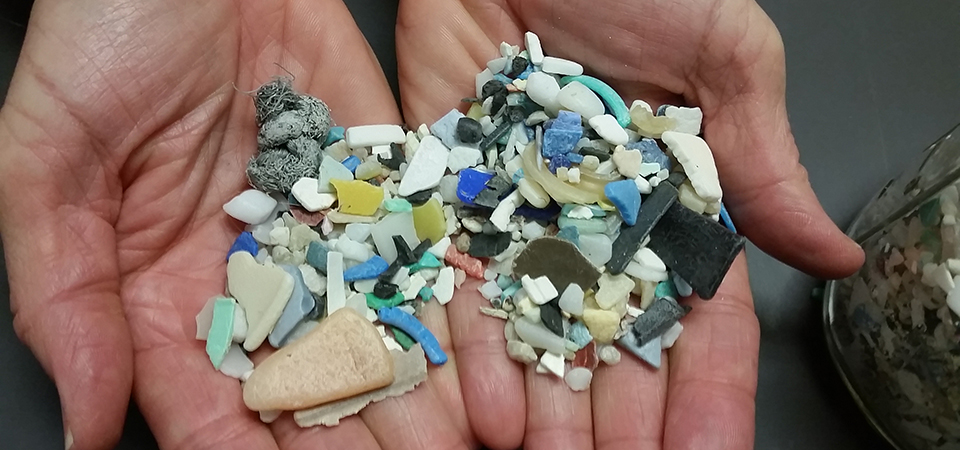
Take a grain of sand. Now imagine something even smaller. Microplastics are tiny pieces of plastic. smaller than the tip of a pencil, and some so small you'd need a microscope to see them.
They come from all over. When a plastic water bottle breaks down in a landfill, it doesn't disappear. it crumbles into tinier and tinier pieces. When you wash clothes made of polyester or nylon, tiny plastic fibers wash out with the water. Car tires shed plastic particles onto roads. Plastic food packaging flakes off invisible bits.
These tiny pieces end up everywhere. in rivers, in oceans, in rain, in soil, and in the water that comes out of your tap.
Where have they been found?
Microplastics have been found in tap water, bottled water, table salt, honey, beer, fruits, vegetables, the air we breathe, human blood, human lungs, human hearts, human brains, and human placentas. They are essentially everywhere.
Are They Dangerous?
Honestly? We don't know for sure yet. That's part of the problem, and part of why this announcement matters.
Some studies suggest that microplastics can cause inflammation in the body, disrupt hormones, and damage cells. But scientists haven't yet agreed on exactly how much microplastic is dangerous, or what the long-term effects of constant low-level exposure are. We also don't have a standard way to measure them in water. different labs use different methods, which makes comparing results hard.
What scientists do agree on: having plastic particles in our bodies is not natural, it wasn't happening 70 years ago, and we should probably figure out what it's doing to us.
What Did EPA Actually Do?
Think of it as a "things we should investigate" list.
EPA keeps a list called the Contaminant Candidate List (CCL). It's not a list of things that are regulated. it's a list of things that might need to be. Getting on this list means EPA is saying: "We see this in drinking water, we think it could be a problem, and we're going to study it more."
Microplastics and pharmaceuticals (drugs that end up in water) were both added for the first time. That's a big deal because it means the government officially acknowledges these are worth worrying about. But it's step 1 of about 10 steps before any actual rules happen.
At the same event, HHS Secretary Robert F. Kennedy Jr. announced a $144 million research program called STOMP (Systematic Targeting Of MicroPlastics), led by the Advanced Research Projects Agency for Health (ARPA-H), to study where microplastics are showing up in the human body and what they're doing to our health.
What Doesn't This Do?
This is important: your water company doesn't have to test for microplastics. Nobody has to remove them. No company faces any new rules. The CCL is a research tool. it points scientists and regulators in the right direction, but it doesn't require anyone to do anything.
The path from "on the watch list" to "there's a legal limit in your water" typically takes 5 to 10 years. It requires studying how often the contaminant appears in water systems, figuring out at what level it becomes dangerous, proposing a rule, taking public comments, and finalizing it. That hasn't started yet.
The Political Angle
This announcement was made jointly by EPA Administrator Lee Zeldin and Health Secretary Robert F. Kennedy Jr. as part of the "Make America Healthy Again" (MAHA) initiative. The same administration has simultaneously delayed PFAS reporting rules, proposed loosening coal ash regulations, and tried to throw out the soot pollution standard.
Putting microplastics on a watch list doesn't cost anything and doesn't impose rules on any industry. It's a signal, not a regulation. Whether it leads to actual rules depends on future budgets, future science, and future political will.
The bottom line
Microplastics are in your water. EPA now officially says that's worth looking into. That's a real step. But nobody's cleaning them out of your water tomorrow. If you're concerned, home water filters that use reverse osmosis or activated carbon can reduce microplastics, but there are no federal requirements for water utilities to do so.
Sources: EPA News Release (April 2, 2026); EPA Draft CCL 6; Associated Press; Safe Drinking Water Act, 42 U.S.C. §300g-1. Have a correction? Contact us.