What's Happening?
According to the California Department of Fish and Wildlife (CDFW), the agency has been investigating increased reports of debilitated and dead seabirds on California beaches since last fall. Of the birds examined, nearly all have been younger birds that are severely emaciated, sometimes with secondary fungal infections, heavy parasite loads, or injuries, but the primary cause of death is starvation.
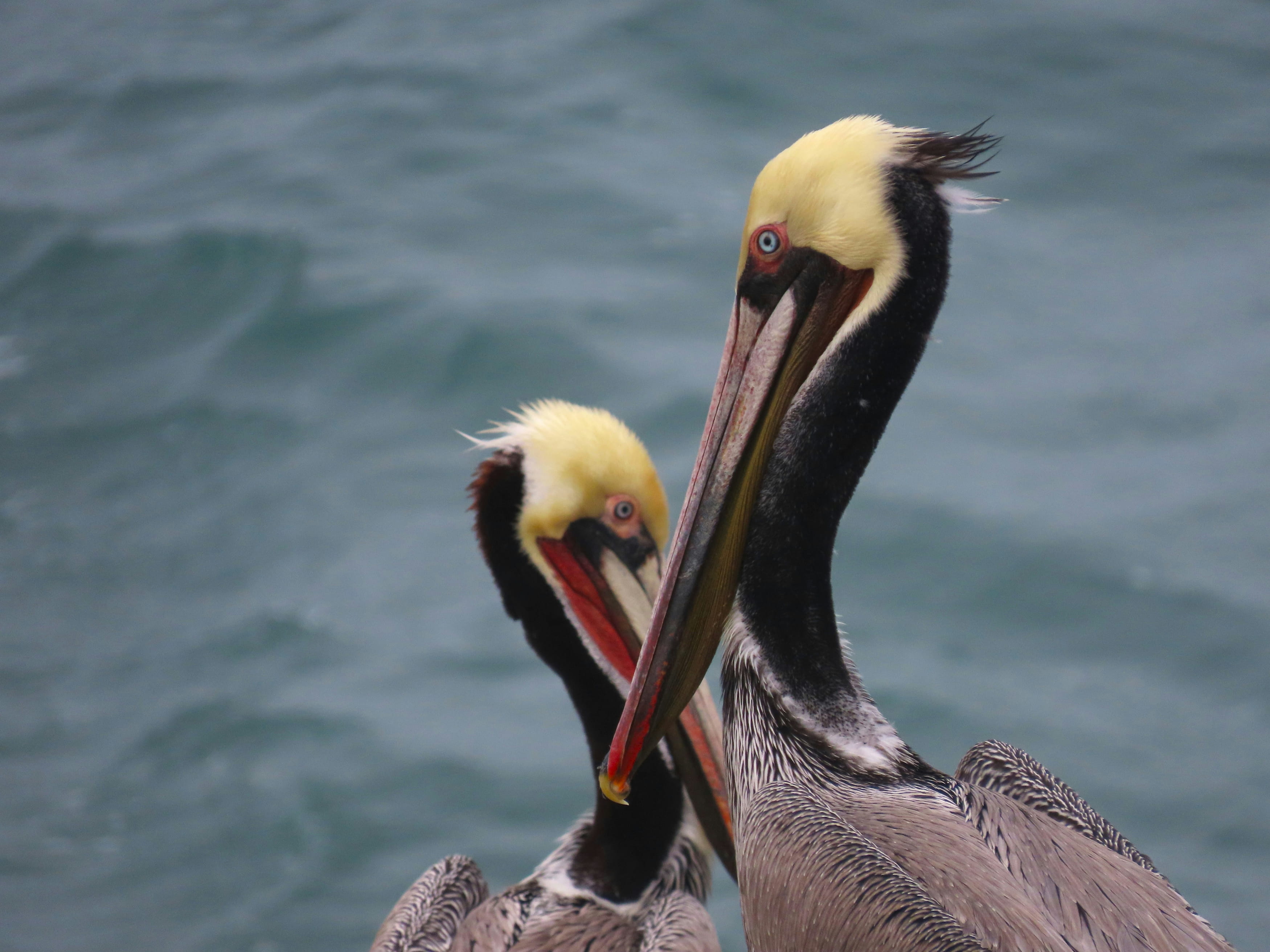
Three species are hit hardest: Brandt's cormorants, common murres, and California brown pelicans. According to CDFW, reports have come from along the entire California coast, roughly Mendocino County south to San Diego County. Wildlife rehabilitation facilities across the state have been admitting increased numbers of weakened birds. According to International Bird Rescue, over 100 starving and injured birds came into their care in a single recent month.
It's Not Bird Flu
When large numbers of birds start dying, avian influenza is usually the first concern. According to CDFW's investigation, avian influenza was not detected in any of the 33 Brandt's cormorants the agency tested. Out of roughly 34 common murres tested by CDFW and partner agencies, only four showed preliminary detections of bird flu. The agency concluded that the current seabird mortality "appears to be largely unrelated to avian influenza activity."
So if it's not disease, what's killing them?
They Can't Reach Their Food
The ocean off California is unusually warm right now. And when the ocean gets warmer, the small fish that seabirds eat (anchovies, sardines, and other bait fish) move deeper, chasing cooler water below the warm surface layer.
That's a problem, because most of these birds can't dive very deep.
Think about it like this.
Imagine your refrigerator moved to the basement, and you could only reach the top shelf. There's still food in the fridge. You just can't get to it. That's what's happening to these birds. The food is still in the ocean. It's just too deep for them to reach.
According to JD Bergeron, CEO of International Bird Rescue, in an interview with CBS8 San Diego, even the most athletic adult brown pelican can only dive about six feet. If the bait fish are deeper than that, the birds simply can't feed. Young birds, which make up most of the dead, are even less skilled at finding food than adults.
Why so many young birds?
According to CDFW, seabird researchers reported that 2025 was an unusually strong breeding year for these species. A boom in reproduction means a boom in juveniles, inexperienced birds that are worse at catching prey, less resilient to bad weather, and the first to die when food gets scarce. It's a natural cycle, but the warm ocean is making it deadly.
The "Blob" Is Back
The warm water off California isn't a mystery. According to NOAA Fisheries, a massive marine heatwave has dominated waters off the West Coast since the summer of 2025. This heatwave, designated NEP25A, has raised the temperature of waters along the West Coast roughly 3 to 4 degrees Fahrenheit above normal.
According to NOAA's California Current Marine Heatwave Tracker (nicknamed the "Blobtracker"), NEP25A reached a maximum size of roughly 10 million square kilometers in September 2025, making it the largest marine heatwave by area observed in the Northeast Pacific since monitoring began in 1982. NOAA reported that coastal sea surface temperatures during the winter of 2025–2026 were among the warmest ever recorded for that time of year.
What is a marine heatwave?
A marine heatwave is a period when ocean temperatures in a region are significantly above normal for an extended time, usually at least five days, often much longer. Think of it like a heat wave on land, but in the ocean. The water doesn't have to be boiling. Even a few degrees above normal can disrupt the entire food chain, from plankton to fish to the birds and mammals that eat them.
The current heatwave is being compared to the notorious 2013–2016 marine heatwave known as "The Blob", a massive patch of warm water that disrupted the entire Pacific coast ecosystem. According to NOAA, the current heatwave has "rivaled the enormous 2013–2016 marine heatwave known as 'The Blob' in terms of size and surface temperatures."
This Has Happened Before, and It Was Devastating
During the 2014–2016 Blob, the same species that are dying now were hit catastrophically. According to a 2020 peer-reviewed study published in PLOS ONE, approximately 62,000 dead or dying common murres washed ashore on beaches from California to Alaska between summer 2015 and spring 2016. The researchers estimated the actual death toll approached one million birds, since only a fraction of birds that die at sea ever wash ashore.
According to the study, nearly all the dead birds were severely emaciated, the same pattern CDFW is seeing now. The researchers attributed the die-off to the marine heatwave disrupting the ocean food web: warmer water increased the energy needs of fish (ectotherms burn more calories in warmer water) while simultaneously reducing the quality and availability of their prey. The result was a collapse in forage fish populations that rippled up to seabirds.
As Inside Climate News reported, the researchers described the die-off as "unprecedented and astounding." Common murres weren't the only species affected. Tufted puffins, Cassin's auklets, sea lions, and baleen whales also experienced mass die-offs during the same period.
How fast can seabirds starve?
According to the PLOS ONE study, common murres that can't fully meet their daily food demand start declining rapidly. If they can't find any food for three to five days, they die of starvation. These are not birds with large fat reserves. They burn energy fast and need to eat constantly.
Is This Climate Change?
It's complicated, and we're going to give you the honest answer instead of the easy one.
Marine heatwaves are caused by multiple factors layered on top of each other. According to the PLOS ONE researchers who studied the 2014–2016 Blob, the extreme ocean heat resulted from several overlapping causes: long-term ocean warming from climate change contributed roughly 25 percent of the temperature anomaly. The Pacific Decadal Oscillation, a natural recurring climate pattern, contributed about 35 percent. A strong El Niño from 2015–2016 added more. And about a quarter of the warming was unaccounted for by any known pattern.
So climate change isn't the whole story, but it's part of the foundation. According to NOAA, the current heatwave marks only the third time on record that such a large section of the coastal ocean has remained so warm for so long without it being an El Niño event. Scientists are also watching whether an El Niño develops later in 2026, which according to forecasters could worsen conditions further.
What scientists do agree on: marine heatwaves are becoming more frequent, and the baseline ocean temperature keeps rising. Each new heatwave is starting from a warmer starting point than the last one.
What Comes Next?
According to NOAA research scientist Michael Jacox, forecasts suggest the warm waters may dissipate in the coming months as warm surface waters mix with cooler water from below. But NOAA scientists cautioned that they are "in uncharted conditions" and need to assess outcomes as they develop.
According to CDFW, wildlife officials will continue monitoring for other factors that could compound the problem, including parasitic infections and harmful algal blooms like domoic acid, which periodically poison seabirds and marine mammals along the California coast.
In the meantime, JD Bergeron of International Bird Rescue put it plainly to CBS8: "It is not good times in the ocean. We talk about the canary in the coal mine. I tend to think of seabirds in the ocean."
What you can do
If you see a sick or dead seabird on a California beach, don't touch it. Don't try to feed it or remove fishing line from it. Call your local wildlife rehabilitation facility to report stranded birds, or report dead birds to CDFW's Wildlife Health Laboratory. To report marine mammals, call the NOAA Fisheries West Coast Region Stranding Hotline at (866) 767-6114.
Sources: California Department of Fish and Wildlife, "CDFW Finds Starvation to be Primary Cause of Increased Mortalities in California Seabirds" (March 27, 2026); NOAA Fisheries, "West Coast Waters Experiencing Another Large Marine Heatwave" (February 2026); NOAA Southwest Fisheries Science Center, California Current Marine Heatwave Tracker; Piatt et al., "Extreme mortality and reproductive failure of common murres resulting from the northeast Pacific marine heatwave of 2014–2016," PLOS ONE (2020); CBS8 San Diego, "Seabird deaths along California beaches raise alarm" (March 2026); International Bird Rescue, "Hungry for Survival" (April 2026); reporting by KALW, Inside Climate News. Have a correction? Contact us.